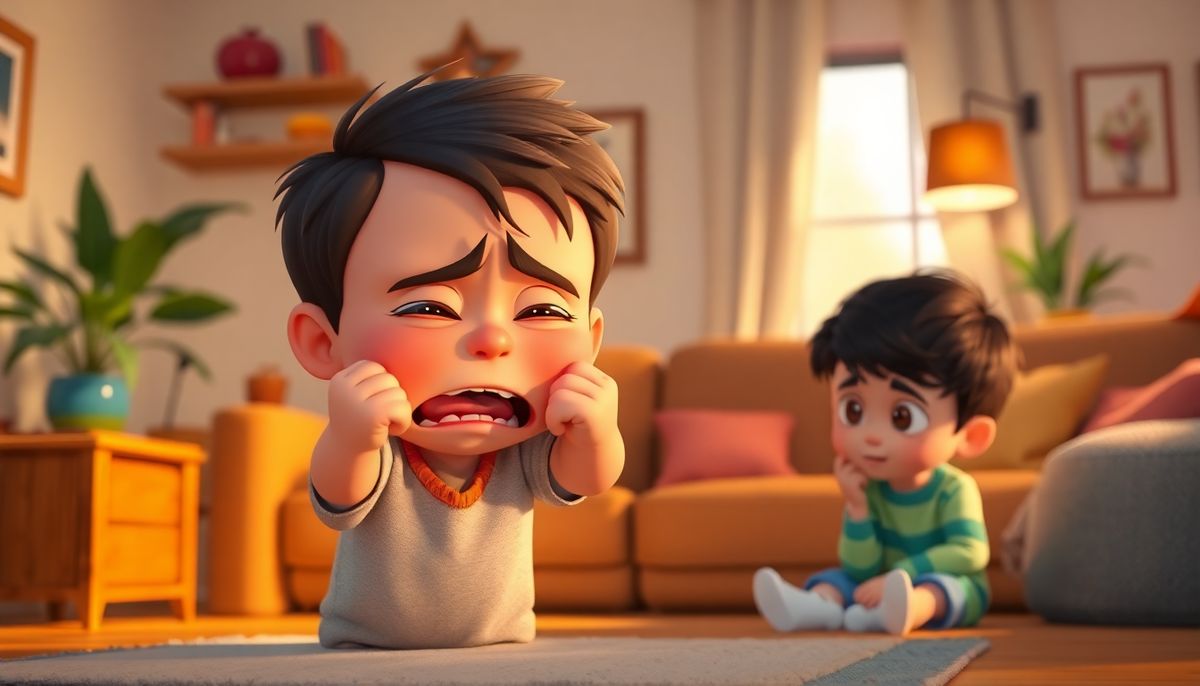
Why This Skill Matters Now
Between ages 4 and 8, kids start having the brain capacity to notice their own emotions before they boil over — but they don't yet have the tools to do anything about it. That gap is where meltdowns live. Teaching anger regulation isn't about stopping anger (that's not realistic or healthy). It's about giving your child a repeatable, physical strategy — deep breathing — that they can reach for before things escalate.
This works best as a skill you build during calm moments, not something you try to introduce mid-tantrum for the first time.
Step 1: Teach the Body Signals First (Days 1-3)
Before breathing techniques mean anything, your child needs to recognize what anger feels like in their body. Sit down during a calm, ordinary moment (not after a blowup) and ask:
- "When you're mad, does your face get hot?"
- "Do your hands make fists?"
- "Does your tummy feel tight or your heart beat fast?"
Give it a name together — some families call it "the fire feeling" or "the dragon feeling." Naming it matters because young kids often can't regulate what they can't identify.
Step 2: Practice Breathing When They're NOT Angry (Days 4-7)
This is the step most parents skip, and it's the one that matters most. Practicing a new skill for the first time during a meltdown is like trying to teach someone to swim while they're drowning. Instead:
- Practice 3 times a day for one week, for 30-60 seconds each, during calm moments — before dinner, before bed, in the car.
- Use a concrete visual: "smell the flower, blow out the candle" (in through the nose for 4 counts, out through the mouth for 4 counts).
- Make it physical — have them put a hand on their belly to feel it rise and fall.
By the end of the week, your child should be able to do the breathing pattern on command, without you coaching every step.
If your child responds well to stories and characters as a way to absorb new routines, this is exactly the kind of moment Dragon of Big Feelings is built for — it walks a child through identifying anger and using breathing to calm down, in a story format that gives them language and a character to reference later ("remember what the dragon did?") instead of just a rule from a parent.
Step 3: Introduce It During Low-Level Frustration (Week 2)
Don't wait for a full meltdown to test this. Watch for early, low-stakes frustration — a puzzle piece not fitting, a sibling taking a toy — and prompt gently:
- "I see your hands are in fists. Want to try the breathing?"
- Breathe with them. Kids regulate better when they're not doing it alone.
- Praise the attempt, not the outcome: "You noticed you were getting mad. That's the hard part."
Step 4: Build a Simple Anger Plan Together (Week 3)
Once breathing is familiar, create a short, visual 3-step plan your child helps design. Keep it to three steps max:
- Notice the fire feeling.
- Take 3 dragon breaths.
- Say what's wrong or ask for help.
Write or draw it on an index card and post it somewhere visible — the fridge, their bedroom door. Kids this age respond well to having ownership over the plan rather than being handed a rule.
Step 5: Expect Setbacks — That's Normal (Ongoing)
During an actual big meltdown, your child likely won't be able to use the skill at first — the more intense the emotion, the harder it is to access a learned strategy, even for adults. That's expected, not a sign it's failing. Your job during a real meltdown is different from your job during practice:
- Stay calm and nearby. Don't lecture mid-meltdown.
- Once they're back to baseline, briefly revisit: "That was a big fire feeling. Next time, let's try a breath before it gets that big."
- Avoid punishing the anger itself — punish behavior (hitting, throwing) separately from the emotion.
A 3-Week Checklist You Can Actually Follow
- [ ] Days 1-3: Talk about body signals of anger during calm moments. Name the feeling together.
- [ ] Days 4-7: Practice breathing 3x/day when calm. Use a visual cue (flower/candle, hand on belly).
- [ ] Week 2: Prompt breathing during small frustrations, not full meltdowns. Breathe together.
- [ ] Week 3: Create a 3-step anger plan card with your child. Post it somewhere visible.
- [ ] Ongoing: After meltdowns, calmly review what happened once your child is regulated again.
When to Check In With a Professional
Most kids this age have frequent, loud, physical anger — that's developmentally typical, not a red flag on its own. But if anger is frequently aggressive toward others, is escalating over time, involves self-harm, or is significantly disrupting school or family life despite consistent practice with these steps, talk to your pediatrician. They can help rule out other factors and point you toward additional support if needed.
The goal isn't a child who never gets angry. It's a child who, by age 8 or so, can say "I'm really mad right now" and take a breath before deciding what to do next. That's a skill most adults are still working on — so give the process time.